Wet Basement Repair in Niagara
Find and fix the source of basement water, from leaking cracks to failed tie rods and pipe penetrations.
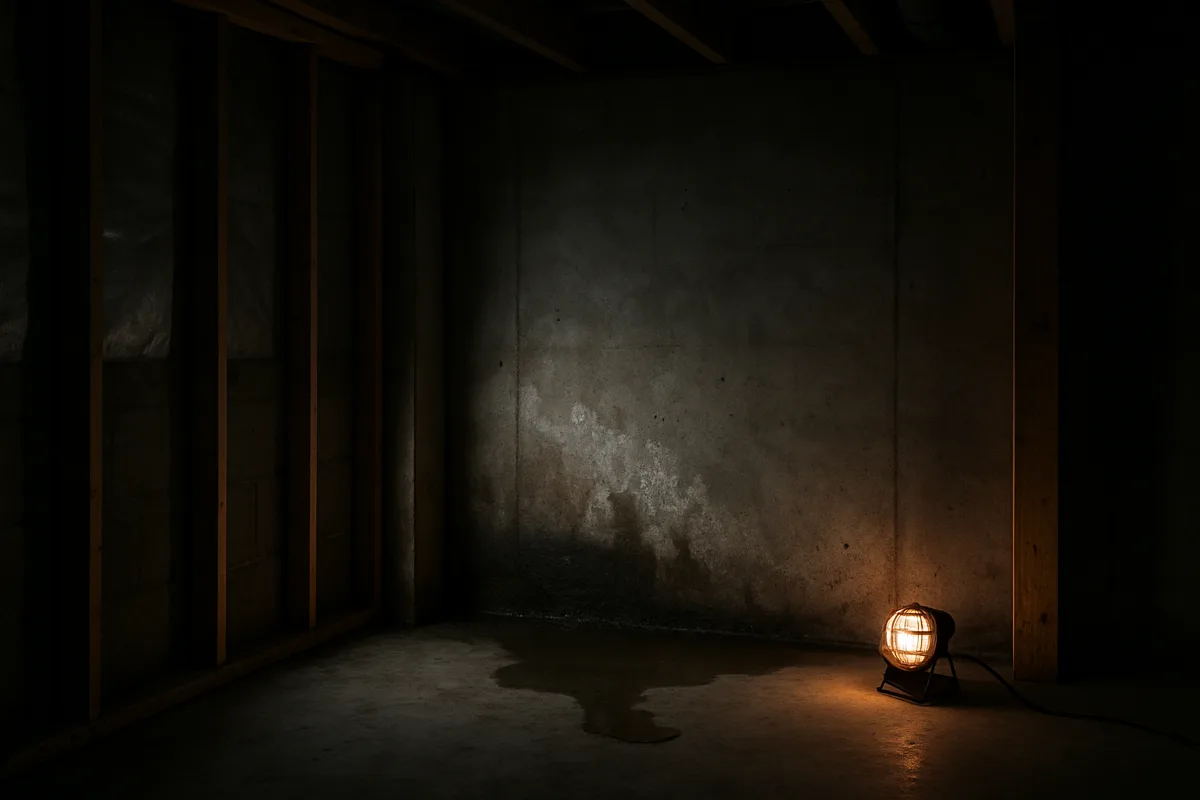
There is a particular smell to a wet basement in Niagara in April. It is the smell of a 1960s bungalow in Welland or the north end of St. Catharines that has taken on water at the same corner every spring for years, been dried out with a fan and a dehumidifier, and been declared “fine” until the next thaw. The carpet underlay has been damp so many times it has stopped drying fully. The bottom plate of the framing is soft. Nobody has ever found where the water actually comes in.
Finding it is the job. Wet basement repair is not a product; it is a diagnosis followed by the right repair for what the diagnosis turned up. Sometimes that is a single crack we inject in an hour. Sometimes it is a tie rod hole hidden behind panelling. Sometimes it is a downspout dumping 40 feet of roof onto the foundation. We trace it, we show you, and we fix the actual entry point.
Where basement water comes from in Niagara
Cracks in poured concrete walls
The number one source. Shrinkage cracks near window corners, beam pockets and wall steps leak whenever the clay outside is saturated. They are repaired permanently with crack injection from inside.
Tie rod and snap-tie holes
Poured walls are formed with steel ties that run through the wall. When the forms come off, the ties are snapped and the holes plugged. Those plugs fail. The result is a small, round weep, often in a neat horizontal row about a metre off the floor, that is easy to mistake for a random damp patch. They inject the same way a crack does.
Pipe and service penetrations
Where the water line, the sewer lateral, the gas service or the hydro conduit passes through the wall, the annular gap around it was sealed once, decades ago. In the older cores of Thorold, Welland and Niagara Falls these are a constant source. Sealed from inside.
Window wells
A window well with no drain, or with a drain that has silted shut, is a bucket. In a heavy rain it fills, and the water comes through the window frame or the crack that inevitably runs down from the corner of the opening.
The wall-floor joint (the cove)
Water appearing along the bottom of the wall where it meets the slab, or bubbling up through slab cracks, is usually not a wall leak at all. It is groundwater rising above the slab because the weeping tile is not carrying it away. This is the signature of Niagara’s high water table neighbourhoods, and the fix is drainage, not sealant. We cover it under basement waterproofing.
Block walls weeping through the face
Concrete block absorbs water into its hollow cores, holds it, and lets it out through the face or the bottom course. A block wall with efflorescence across a whole panel, rather than along a single line, is doing exactly that.
Outside the house entirely
Downspouts discharging at the foundation, grading that slopes toward the house, a driveway or patio that has settled against the wall, and a sump discharge line that empties beside the house and recirculates. None of these need injection. All of them need to be fixed or the wall will stay wet.
How we find the source
- Interview and history. When does it leak, where does it show first, what has been tried. A leak that appears two days after rain is a different problem from one that appears during the rain.
- Full interior inspection. Every wall, the slab, the cove joint, every penetration, the sump pit and pump, the window wells from inside. We use a moisture meter on finished walls and, where needed, remove a small section of finish to see the concrete.
- Exterior walk. Grading, downspouts, window wells, sump discharge, driveway and walkway slopes, and anything that has been added against the wall since the house was built.
- Water test when it makes sense. If the entry point is not obvious, we run a hose at a specific location outside and watch inside. It is low-tech and it works.
- A written diagnosis. What is coming in, where, why, and the repair options in order of cost and invasiveness. We start with the least invasive repair that actually solves it.
Repairs, matched to the source
- Polyurethane injection for cracks, tie rod holes and pipe penetrations in poured walls. One visit, no digging, written warranty.
- Epoxy injection when a crack also needs to be structurally rebonded. See foundation crack repair for how we decide.
- Window well drains and covers where the well is the bucket.
- Interior drainage and sump systems for cove-joint seepage and slab water in high water table areas.
- Interior membrane systems for block walls that weep across the face.
- Exterior corrections for grading and downspouts. Often the homeowner does these themselves once we point them out.
What it costs, and what moves the number
- Type of entry point. A tie rod hole is the cheapest repair we do. A single crack is next. Interior drainage is a larger project priced by the linear foot.
- How many entry points. Second and third repairs in the same visit cost less than the first because the setup is shared.
- Finished vs unfinished basement. Access through drywall, panelling or built-ins adds time and patching.
- Whether the sump and weeping tile are working. If they are not, the honest fix is bigger than a crack repair, and we tell you before you spend money on the wrong one.
- Urgency. A basement taking on water right now gets a faster response, and we can usually stop the active entry the same day even if the full repair follows.
The inspection is free and comes with a written price. No guesswork over the phone.
What a Niagara wet basement repair has to account for
Clay that turns the yard into a bowl
Most of Niagara south of the Escarpment sits on the Haldimand Clay Plain, glacial lake clays that drain slowly and stay saturated into late spring. The St. Catharines lakeshore has its own lake-bed clay. When a foundation is dug into clay and backfilled, the backfill is looser than the surrounding clay, so water collects in that trench against the wall and sits there. Every Niagara basement is, in effect, standing in a clay bathtub. That is why grading and downspouts matter so much here, and why “it only leaks in spring” is such a common story.
Spring thaw on frozen ground
Niagara’s winters cycle around the freezing mark rather than locking down. Snowmelt and March rain hit clay that is still frozen a foot down and cannot soak away. The water goes sideways, into the backfill trench, and up against the wall. The first thaw weekend of the year is our busiest week.
High water table zones
The north end of St. Catharines toward the lake, the Crystal Beach and Ridgeway shorelines of Fort Erie, Chippawa along the Welland River, Dain City and the streets along the Welland Canal in Welland and Thorold: in these areas the groundwater can sit above the slab for weeks. Wall injection stops wall leaks. Water coming through the cove or the slab in these neighbourhoods is a drainage problem and needs a sump that works and tile that reaches it.
Poured vs block, by era
Wartime and early postwar streets across Niagara have a high share of concrete block foundations, and the oldest cores of Thorold, Welland, St. Catharines and Niagara Falls have stone and brick. Poured concrete takes over from roughly the 1960s. Block leaks through its cores and is repaired with drainage and membranes; poured leaks through cracks and ties and is repaired with injection. Identifying which one you have changes everything that follows.
Weeping tile, sumps and the sewer
The Ontario Building Code requires foundation drainage around a basement and, where a sump is used, a covered pit at least 750 mm deep with an automatic pump when gravity drainage is not possible. Many older Niagara homes still have weeping tile connected to the sanitary sewer, which means a heavy storm can back sewage into the basement through the floor drain. Niagara Falls runs a Weeping Tile Removal Assistance Program, and Welland and other municipalities have their own flood-protection subsidy programs, to help homeowners disconnect and add a sump and backwater valve. If your wet basement smells like sewer rather than earth, that is where to start.
A word on mould and finishes
Stopping the water is step one, and it has to come first. Existing mould on drywall, underlay or framing should be cleaned or removed once the source is fixed, and wet insulation behind a finished wall generally needs to come out. We will tell you honestly what we see when we open a wall. We do not do remediation, and we will not tell you a wall is fine if it is not.
Get the source found
If your basement has been wet more than once, someone needs to find the entry point rather than the wet spot. We do that for free, we explain what we found in plain language, and we give you a written price for the least invasive repair that will actually hold. Call (289) 271-5869 or book your free wet basement inspection. We serve St. Catharines, Niagara Falls, Welland, Fort Erie, Thorold and the surrounding Niagara Region, and an actively leaking basement moves to the front of the schedule.
How It Works
Free Crack Inspection
We inspect the crack from inside the basement, check for signs of movement or structural concern, and confirm whether injection is the right repair before anything is booked.
Crack Preparation
The crack is cleaned along its full length, surface ports are set at regular intervals, and the face of the crack is sealed with epoxy paste so the injection material stays inside the wall.
Injection
Epoxy or polyurethane is injected port by port from the bottom up until the crack is filled through the full thickness of the wall, not just at the surface.
Verification & Warranty
We confirm the crack is filled end to end, remove the ports, and walk you through the finished repair. Your injection is backed by a written warranty against leaking.
Frequently Asked Questions
Why is my basement wet?
Common causes include leaking foundation cracks, failed tie rod holes, gaps around pipe penetrations, window well drainage problems, and poor grading or downspouts outside. A proper inspection identifies the actual entry point rather than treating symptoms.
Can you fix a basement leak from inside?
Yes. Most leaks through poured concrete walls, including cracks, tie rods and pipe penetrations, can be sealed permanently from inside with polyurethane injection. There is no digging and most repairs are done in a single visit.
How fast should I deal with a basement leak?
Promptly. Even a slow leak feeds mould, damages finishes and belongings, and tends to get worse during spring thaw and heavy storms. Early repair is also cheaper because water damage has not spread.
Do you repair leaks in block foundations?
Block walls take on water differently than poured concrete because water travels inside the hollow cores. We assess block foundations case by case and recommend the right fix, which may be interior waterproofing rather than injection.
Is water coming up through the floor the same problem as a wall leak?
No. Water at the wall-floor joint or through slab cracks usually means the water table is above the slab or the weeping tile is not moving water to the sump. That is a drainage problem, and injecting the wall will not solve it. We test for it on the first visit.
Will a dehumidifier fix a damp basement?
A dehumidifier manages humidity in the air. It does nothing about water entering through the wall, and running one against an active leak just hides the problem until the unit fails or the season changes. Fix the entry point first, then use the dehumidifier for comfort.
My basement only leaks in spring. Is it still worth fixing?
Yes, and spring is exactly when Niagara basements leak, because frozen clay stops meltwater from soaking away and pushes it against the wall. A once-a-year leak is still saturating the wall, the framing and the insulation every year, and the crack behind it widens with each freeze.
Does home insurance cover a wet basement?
Most standard policies do not cover seepage through the foundation, which is treated as maintenance. Sudden events like sewer backup or burst pipes may be covered depending on your policy and endorsements. Documenting a proper repair can help with future claims and with resale.