Foundation Crack Repair in Niagara
Assessment and repair of vertical, diagonal and stair-step foundation cracks in poured and block walls.
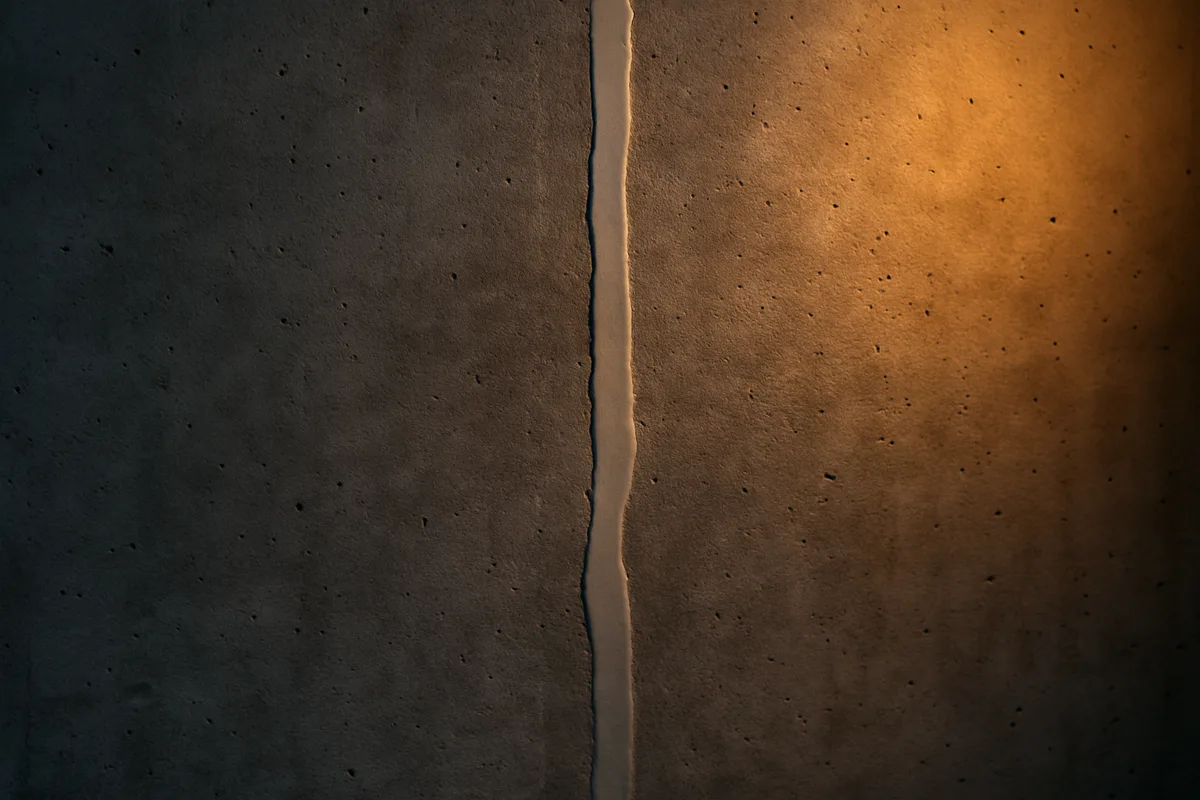
Most people find their foundation crack by accident. They pull a shelving unit away from a basement wall in a 1970s sidesplit in Niagara Falls and there it is: a thin line running from the corner of the window down to the slab, with a tan stain beside it that was not there when they moved in. The question that follows is always the same. Is this cosmetic, or is the house moving?
That question is the whole job. Foundation crack repair in Niagara starts with reading the crack correctly, because the fix for a shrinkage crack in a poured wall is an afternoon of crack injection, and the fix for a wall being pushed in by saturated clay is something else entirely. We do the assessment for free, we tell you which one you have, and we do not sell a structural repair to a house that needs a syringe.
Reading the crack: what the pattern tells you
Cracks are a language. The direction, width and location say more than the crack itself.
Vertical and diagonal cracks in poured concrete
The most common crack in Niagara, by far. Concrete shrinks as it cures, and a long poured wall relieves that stress by cracking, usually near a corner of a window opening, at a beam pocket, or where the wall steps down. These run vertically or on a slight diagonal, are typically hairline to about 3 mm, and are the same width top to bottom or slightly wider at the bottom. They are not a sign the house is moving. They are a sign the wall is concrete. They leak, and injection stops that permanently.
Diagonal cracks that widen at one end
A diagonal crack noticeably wider at the top than the bottom (or the reverse) can mean one section of footing has settled relative to the other. Sometimes that settlement finished decades ago and the crack has been stable since. Sometimes it is ongoing. Monitoring the width across a spring and fall tells us which.
Horizontal cracks
A horizontal crack partway up a wall, particularly around the frost line, is the one we take seriously on sight. It usually means lateral pressure from the soil outside, either from frost expansion in saturated clay or from hydrostatic pressure, is pushing the wall inward. In block walls this often comes with visible bowing. This is a structural condition, and an engineer’s assessment comes before any repair.
Stair-step cracks in block or brick
Cracks that follow the mortar joints in a staircase pattern through concrete block or brick almost always trace back to movement, usually differential settlement or the same lateral pressure that causes horizontal cracks. A stair-step crack with no displacement (the blocks are still in plane with each other) may be stable. One where you can feel a lip between blocks is not.
Cracks in the slab
Floor cracks are usually shrinkage and rarely matter unless water is coming up through them, which in Niagara points to a high water table and a drainage problem rather than a slab problem. See wet basement repair.
Repair options, matched to the crack
- Polyurethane injection for leaking shrinkage cracks, tie rod holes and pipe penetrations in poured walls. Flexible, cures wet, no excavation. The standard Niagara repair.
- Epoxy injection for cracks that need to be structurally rebonded, typically where an engineer has specified it or where the crack sits under a concentrated load. Rigid, stronger than concrete, needs a dry crack and a wall that has stopped moving.
- Carbon fibre reinforcement for walls with early-stage bowing or cracks an engineer wants stabilized against further movement, applied to the interior face after the crack is sealed. Where the structural condition is beyond what we handle, we say so and point you to the right specialist.
- Interior waterproofing and drainage for block walls that take on water through the cores, where injection is not an option. See basement waterproofing.
- Exterior excavation as a last resort, when a wall is badly deteriorated or the exterior drainage has failed. We will tell you when you actually need this, and it is far less often than some contractors suggest.
Our assessment and repair process
- Walk every wall. We look at all four walls and the slab, not just the crack you found. We are checking for other cracks, staining, efflorescence, tie rod holes, bowing (a straightedge and a level, nothing exotic), and the condition of window wells and penetrations.
- Classify each crack. Shrinkage, settlement, lateral pressure, or slab. We photograph and measure each one and explain what we see while we are standing in front of it.
- Check what is happening outside. Grading, downspout discharge, window wells, and where the sump discharges. A crack that is being fed by a downspout dumping beside the foundation will keep the whole wall wet no matter what.
- Give you a written plan and price. For a shrinkage crack, that is usually injection on the spot or on a return visit. For anything structural, it is a recommendation to get an engineer involved, with a clear explanation of why.
- Do the repair and document it. Photos before and after, the material used, and a written warranty against leaking for every injected crack.
What you get from doing it properly
- A repair that lasts. Injection fills the crack through the full wall, not just the face, which is why it survives Niagara freeze-thaw where hydraulic cement does not.
- A dry, usable basement. Stop the water and you stop the musty smell, the staining, and the mould that feeds on damp drywall.
- A straight answer on structure. Most people are relieved to hear “shrinkage crack, we can inject this today.” The ones who are not are glad they found out before finishing the basement.
- Paperwork for resale. Dated photos and a transferable warranty answer the home inspector’s question before it is asked.
- No landscaping damage. Interior repair means the deck, the driveway and the garden stay exactly as they are.
What affects the price
- How many cracks, and how long. The first crack carries the setup; additional cracks in the same visit cost less each.
- Poured or block. Injection on a poured wall is the least expensive path. Block walls need a drainage-based approach that costs more.
- Structural vs non-structural. Epoxy and carbon fibre work is priced higher than polyurethane injection, and may involve an engineer’s fee on your side.
- Finished or unfinished. Cutting and patching drywall, moving built-ins, and working around a furnace or panel all add time.
- Active water. A crack running during the repair takes more staging.
Every assessment is free and comes with a firm written price. No deposit is taken until you have that in hand.
What a Niagara foundation crack repair has to account for
The building science is universal. The dirt is local, and in Niagara the dirt is the problem.
Heavy clay, everywhere
South of the Escarpment, the region is built on the Haldimand Clay Plain: glacial lake clays and silts, imperfectly drained, with groundwater that stays close to the surface until late spring. North of it, the St. Catharines lakeshore has its own lake-bed clays. Clay swells when it is wet and shrinks when it is dry, so a Niagara foundation sees lateral pressure rise every spring and fall away every August. Over decades, that cycle is what turns a hairline shrinkage crack into a leaking one, and in block walls it is what produces horizontal cracking and bowing.
Freeze-thaw, dozens of times a winter
Between Lake Ontario and Lake Erie, Niagara winters hover around freezing rather than locking in. Every swing across zero freezes the water in the saturated clay against the wall and in the crack itself. Design frost depth in southern Ontario is roughly 1.2 metres, which is why footings sit below that, but the wall above the footing takes the full brunt of frost expansion. Flexible polyurethane holds through that. Rigid patches do not.
Water table near the lakes, the rivers and the canal
Fort Erie’s lakeshore communities, the north end of St. Catharines, Chippawa and the Welland River corridor, and the streets that flank the Welland Canal through Thorold, Welland and St. Catharines all live with groundwater that can sit near the footing for weeks. A crack in those zones is under sustained pressure, not just storm pressure, so the injection has to be complete through the wall and the drainage around the house has to be working.
Block walls in the older streets, poured walls after
Housing built for Niagara’s canal, steel, paper and auto workforce through the 1940s and 1950s used a lot of concrete block, and the older cores of Thorold, Welland and St. Catharines have rubble stone and brick foundations older than that. Those need a different approach from the poured walls that became standard from the 1960s on. Telling you which you have is the first thing we do.
Weeping tile that may not be doing its job
The Ontario Building Code requires foundation drainage around a basement and, where a sump pit is used, a covered pit at least 750 mm deep with an automatic pump when it cannot drain by gravity. A lot of Niagara homes predate those requirements or have original clay-tile drains that silted up long ago. Several municipalities, Niagara Falls among them, run programs that assist homeowners with disconnecting weeping tile from the sanitary sewer and installing a sump. When the drainage around the house is the real reason the wall is wet, we tell you, because injecting a crack in a wall that is sitting in water is treating one symptom.
Code, permits and engineers
Non-structural crack repair from inside the basement does not require a building permit. Structural repairs, anything involving reinforcement or underpinning, are done to an engineer’s design, and the municipality may require a permit depending on the scope. We are clear about which side of that line your repair is on, and we hand you the documentation either way.
Start with a free assessment
If you have found a crack and are trying to decide whether to worry, the fastest way to stop worrying is to have it read by someone who looks at foundation cracks all week. We will tell you what kind of crack it is, whether it needs an engineer, what it will cost to fix, and what it will cost to leave. Call (289) 271-5869 or book a free foundation assessment online. We cover St. Catharines, Niagara Falls, Welland, Fort Erie, Thorold and the surrounding Niagara Region, and we get to leaking cracks first.
How It Works
Free Crack Inspection
We inspect the crack from inside the basement, check for signs of movement or structural concern, and confirm whether injection is the right repair before anything is booked.
Crack Preparation
The crack is cleaned along its full length, surface ports are set at regular intervals, and the face of the crack is sealed with epoxy paste so the injection material stays inside the wall.
Injection
Epoxy or polyurethane is injected port by port from the bottom up until the crack is filled through the full thickness of the wall, not just at the surface.
Verification & Warranty
We confirm the crack is filled end to end, remove the ports, and walk you through the finished repair. Your injection is backed by a written warranty against leaking.
Frequently Asked Questions
Are foundation cracks normal?
Hairline shrinkage cracks are common in poured concrete foundations as the concrete cures. Most are not structural, but any crack that leaks, widens over time, or runs in a stair-step pattern through block or brick should be assessed by a professional.
When is a foundation crack a structural problem?
Warning signs include horizontal cracks, stair-step cracks in block walls, cracks wider than a few millimetres, walls that bow inward, and cracks that keep growing. These point to soil pressure or settlement and need an assessment before any cosmetic repair.
Can a cracked foundation be repaired without digging?
Yes, in most cases. Cracks in poured concrete walls can be injected from inside the basement with epoxy or polyurethane, filling the crack through the full thickness of the wall with no excavation.
Will the crack come back after repair?
A properly injected crack is filled through the full depth of the wall and should not leak again, and our repairs carry a written warranty against leaking. New cracks can form in other areas, so we inspect the full foundation while on site.
How do I know if a crack is getting bigger?
Mark each end of the crack with a pencil and date it, and draw a short line across the crack at its widest point. Check it after the spring thaw and again in late fall. If the ends have grown past your marks or the width has visibly changed, call for an assessment.
Do I need an engineer for a foundation crack?
Not for a typical shrinkage crack in a poured wall. If we find a horizontal crack, bowing, or stair-step cracking with displacement, we will tell you plainly that an engineer's opinion is the right next step before any repair, and we can work to their specification afterward.
Does a foundation crack affect selling my home in Niagara?
An unrepaired leaking crack will almost certainly show up in a home inspection and become a negotiating point. A documented repair with photos and a transferable written warranty usually closes the question. Buyers care far more about whether it was fixed properly than whether it ever existed.
Can you repair cracks in a block foundation?
Block walls cannot be injected the way poured walls can, because water moves inside the hollow cores. Depending on what we find, the fix may be interior waterproofing with drainage, exterior work, or reinforcement for structural cracking. We assess block foundations case by case.