Foundation Crack Repair in Welland
Foundation crack injection and wet basement repair for homeowners in Welland. Free assessments, fully insured.
Welland is a city that was built around water, and its basements have never forgotten it. The old canal still runs straight through the middle of town as the recreational waterway, the current canal bypass wraps the east side, and Dain City sits in the crook of both. Underneath the whole city is the Haldimand Clay Plain: dense glacial lake clay that drains slowly, stays saturated well into spring, and holds water against every foundation wall in town. Add the wartime and postwar housing stock that went up for the steel, pipe and canal workforce, much of it on concrete block, and you have a city where wet basements are not the exception.
We repair foundation cracks and wet basements across Welland from inside, without excavation. This page walks through what we see neighbourhood by neighbourhood and which repair fits each one.
Basement problems by neighbourhood
Dain City
Surrounded on three sides by the Welland Canal and the recreational waterway, Dain City is low-lying and its water table is high for much of the year. Repeated flooding has led the city to investigate inflow and infiltration in the neighbourhood’s sewer system. From a foundation standpoint, the recurring problem is groundwater at the wall-floor joint and through the slab rather than a single wall crack. That needs basement waterproofing: interior drainage to a sump that actually works, with a battery backup because storms and outages arrive together. Wall cracks in the poured homes get injected in the same visit.
Downtown and the canal corridor
The centre of Welland along East Main Street, King Street and Division Street is a mix of commercial buildings with converted upper floors and residential streets of homes from the early 1900s through the 1950s. Foundations here are the city’s oldest: stone and brick under the century homes, block under the interwar and wartime houses. The recreational waterway keeps groundwater elevated along the streets that flank it. Injection is rarely the answer for these walls. Wet basement repair here means finding the real entry point, which is often a washed-out mortar joint or an old service penetration, and managing it with drainage and membrane.
Crowland and Welland South
South of the core, Crowland has a stock of well-kept heritage and Victorian-era homes alongside later infill, and the Welland South and Coyle streets carry the postwar workforce bungalows that define so much of the city. Block foundations dominate the 1940s and 1950s houses. The pattern we see is efflorescence hazing a whole block panel, a damp bottom course, and in the worst cases a horizontal crack partway up the wall from decades of clay pressure. Those horizontal cracks need a careful read, which is what our foundation crack repair assessment is for.
Maple Park and the west side
The Maple Park area and the streets running west toward Rice Road and the Pelham boundary were built out later, and poured concrete is more common. The standard call is a shrinkage crack at a basement window corner or beam pocket, leaking each March. That is exactly what crack injection is for: one visit, no digging, warranty in writing.
Cooks Mills and the newer east side
Cooks Mills is one of Welland’s newer family subdivisions, and the developments along Woodlawn Road, Prince Charles Drive and out toward Highway 58 range from the 1980s to current builds. Modern poured walls with plastic weeping tile leak far less, but shrinkage cracks still form as the concrete cures and often start leaking in the second or third spring. Injection handles them permanently.
Our services in Welland
- Crack injection for the poured walls of Maple Park, Cooks Mills and every later subdivision: cracks, tie rod holes and pipe penetrations sealed from inside.
- Foundation crack repair for the horizontal and stair-step cracks in Crowland and Welland South block walls that need an honest structural read.
- Wet basement repair for downtown and canal-corridor century homes where the source has never been properly traced.
- Basement waterproofing for Dain City and waterway-adjacent homes where the water comes from below, and for any Welland basement about to be finished.
Foundations by era in Welland
- Pre-1920 (downtown, Crowland heritage streets): stone and brick. Drainage and membrane, not injection.
- 1920s to early 1960s (Welland South, Coyle, Dain City, downtown infill): concrete block built for the industrial workforce. Weeps through cores, cracks horizontally under clay pressure.
- Mid-1960s to 1980s (Maple Park, the west side, early east-side streets): poured concrete becomes standard. Shrinkage cracks and snap-tie holes. Injection territory.
- 1990s to today (Cooks Mills and the newer east side): modern poured walls. Fewer problems, but shrinkage cracks still form and still leak.
Weather and ground in Welland
Welland sits on the flat central plain of the peninsula, south of the Escarpment, without Lake Ontario’s moderating influence. Winters run a little colder than St. Catharines, frost goes a little deeper, and the ground stays frozen a little longer into the thaw. That is bad news for basements: March meltwater and rain land on clay that is still frozen a foot down, cannot soak away, and go sideways into the backfill trench beside every foundation. The flat terrain does not help, since water pools rather than runs off, and cold air settles across the plain and along the canal.
Summer thunderstorms are the second peak, dropping heavy rain on saturated clay and overwhelming window wells and downspouts. Late fall rain on already-wet ground is the third.
Things specific to Welland that affect foundations
- Haldimand clay under the whole city. Dense, slow-draining, swells wet and shrinks dry.
- The recreational waterway through the core. Groundwater stays elevated along the old canal alignment and the streets that back onto it.
- Dain City’s geography. Low ground with water on three sides and an active municipal investigation into infiltration and flooding.
- The canal bypass on the east side. Fluctuating groundwater along the current shipping channel.
- A large block-foundation housing stock from the industrial boom of the 1940s through 1960s.
- Flat terrain that pools water against houses where grading has settled.
- Weeping tile still on the sanitary sewer in many older homes, which is what the city’s flood-protection subsidy program targets.
- Colder, longer frost than the lakeshore cities, which delays the spring thaw and concentrates the meltwater load.
Areas we cover around Welland
We serve all of Welland and the neighbouring communities: Thorold to the north along the canal and Highway 58, St. Catharines beyond it down Highway 406, and Niagara Falls to the east. Pelham, Fonthill and Port Colborne are on the schedule too; call and ask.
Book a free inspection in Welland
If your Dain City basement takes on water every spring, a Crowland block wall has a crack you cannot read, or a Maple Park window corner stains every March, have it looked at before the next thaw rather than after. The inspection is free, it covers every wall and the drainage, and you leave with a plain explanation and a written price. Call (289) 271-5869 or book a free inspection online. Active leaks move to the front of the schedule.
Our Foundation Repair Services in Welland
We repair leaking foundation cracks and wet basements for homes and businesses in Welland and surrounding areas.
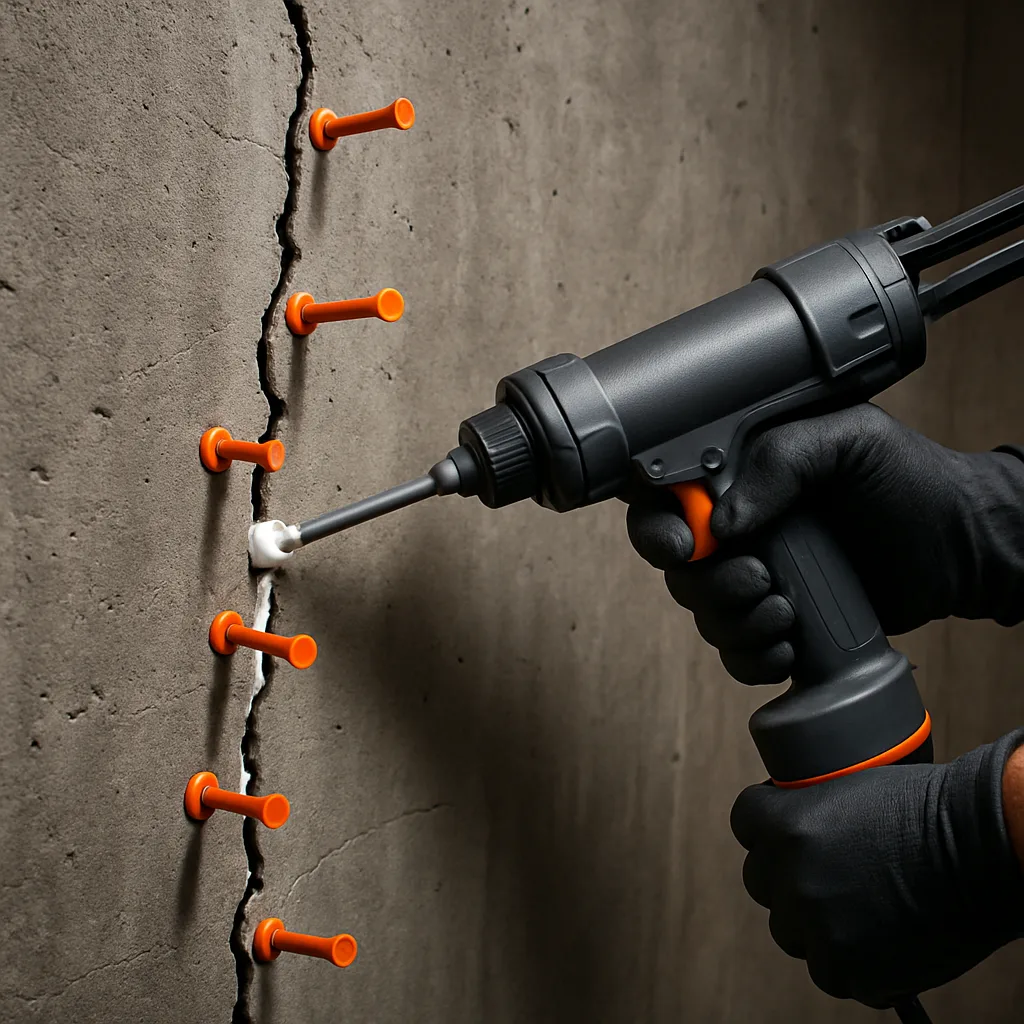
Crack Injection
Epoxy and polyurethane injection that seals foundation cracks from the inside, permanently.
Crack Injection Services
Foundation Crack Repair
Assessment and repair of vertical, diagonal and stair-step foundation cracks in poured and block walls.
Foundation Crack Repair Services
Wet Basement Repair
Find and fix the source of basement water, from leaking cracks to failed tie rods and pipe penetrations.
Wet Basement Repair Services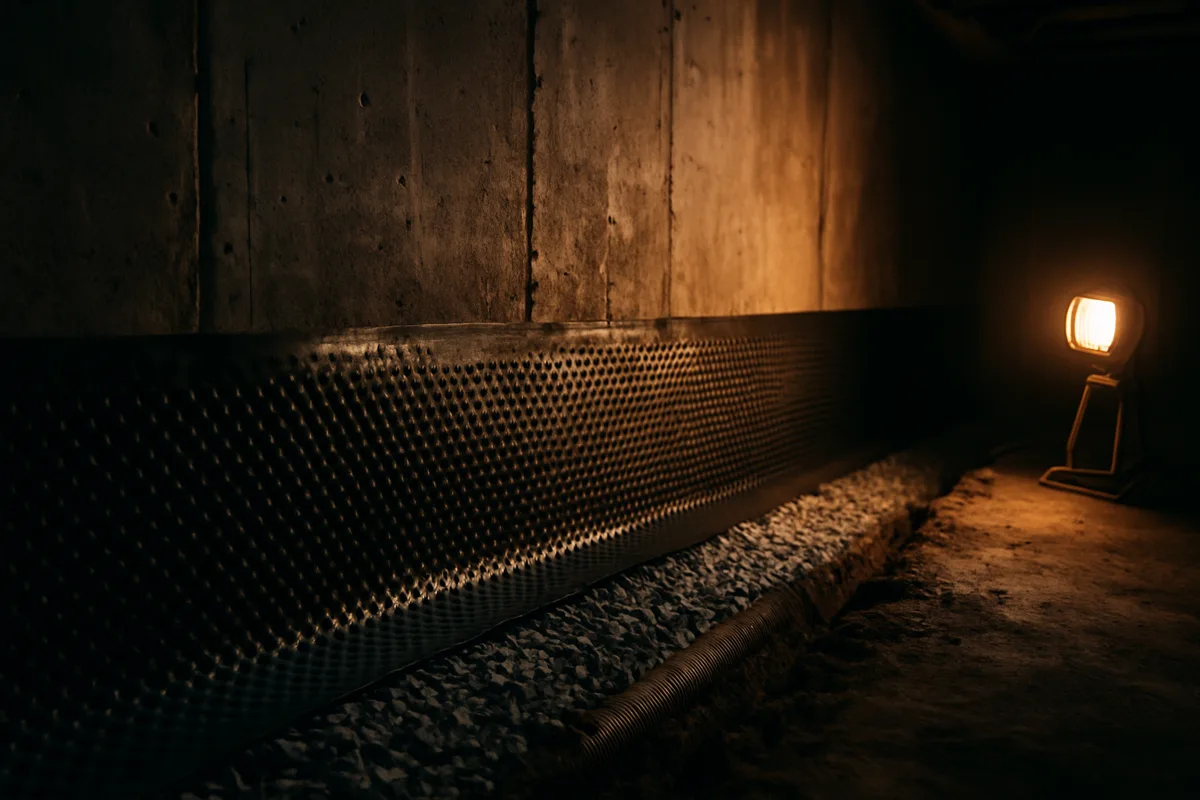
Basement Waterproofing
Interior waterproofing solutions that keep Niagara basements dry through spring thaw and heavy rain.
Basement Waterproofing ServicesHow It Works
Free Crack Inspection
We inspect the crack from inside the basement, check for signs of movement or structural concern, and confirm whether injection is the right repair before anything is booked.
Crack Preparation
The crack is cleaned along its full length, surface ports are set at regular intervals, and the face of the crack is sealed with epoxy paste so the injection material stays inside the wall.
Injection
Epoxy or polyurethane is injected port by port from the bottom up until the crack is filled through the full thickness of the wall, not just at the surface.
Verification & Warranty
We confirm the crack is filled end to end, remove the ports, and walk you through the finished repair. Your injection is backed by a written warranty against leaking.
Foundation Repair FAQ for Welland
Why is Dain City so prone to wet basements?
Dain City sits low, with the Welland Canal and the recreational waterway on three sides, so the water table stays high and the clay underneath drains slowly. The city has been investigating inflow and infiltration in the neighbourhood after repeated flooding. Homes there usually need drainage and a reliable sump, not just a sealed crack.
Does the recreational waterway raise groundwater near downtown?
Properties along the old canal through the city centre and the streets that back onto it sit on ground with a water table influenced by the waterway. Leaks there tend to show at the wall-floor joint in spring, which points to drainage rather than a single crack.
What kind of foundation do Welland's postwar homes have?
The bungalows and one-and-a-half-storeys built for the canal-era industrial workforce in the 1940s through 1960s are heavily concrete block, with poured concrete taking over in the later 1960s. Block weeps through its cores and cannot be injected; poured walls crack and can be. We confirm which you have at the first visit.
How much does crack injection cost in Welland?
A single injected crack in a poured wall typically falls in the broad Ontario range of roughly $400 to $900 depending on length, wall thickness, access and whether it is leaking. We give a firm written price after a free inspection.
Does Welland help pay for sump pumps or backwater valves?
The City of Welland has run a Sewage Water Alleviation Program to help eligible homeowners with flood-protection work such as sump installation and backwater valves. Terms and eligibility are set by the city and change, so confirm the current program before planning work. We will tell you if your job is the kind that typically qualifies.
Is Welland colder than St. Catharines, and does that matter for my foundation?
Slightly, yes. Welland sits on the flat plain south of the Escarpment without Lake Ontario's moderating effect, so frost tends to be heavier and the ground stays frozen longer into the thaw. That means more meltwater moving sideways against foundations in March, which is the busiest leak season in the city.