Basement Waterproofing in Niagara
Interior waterproofing solutions that keep Niagara basements dry through spring thaw and heavy rain.
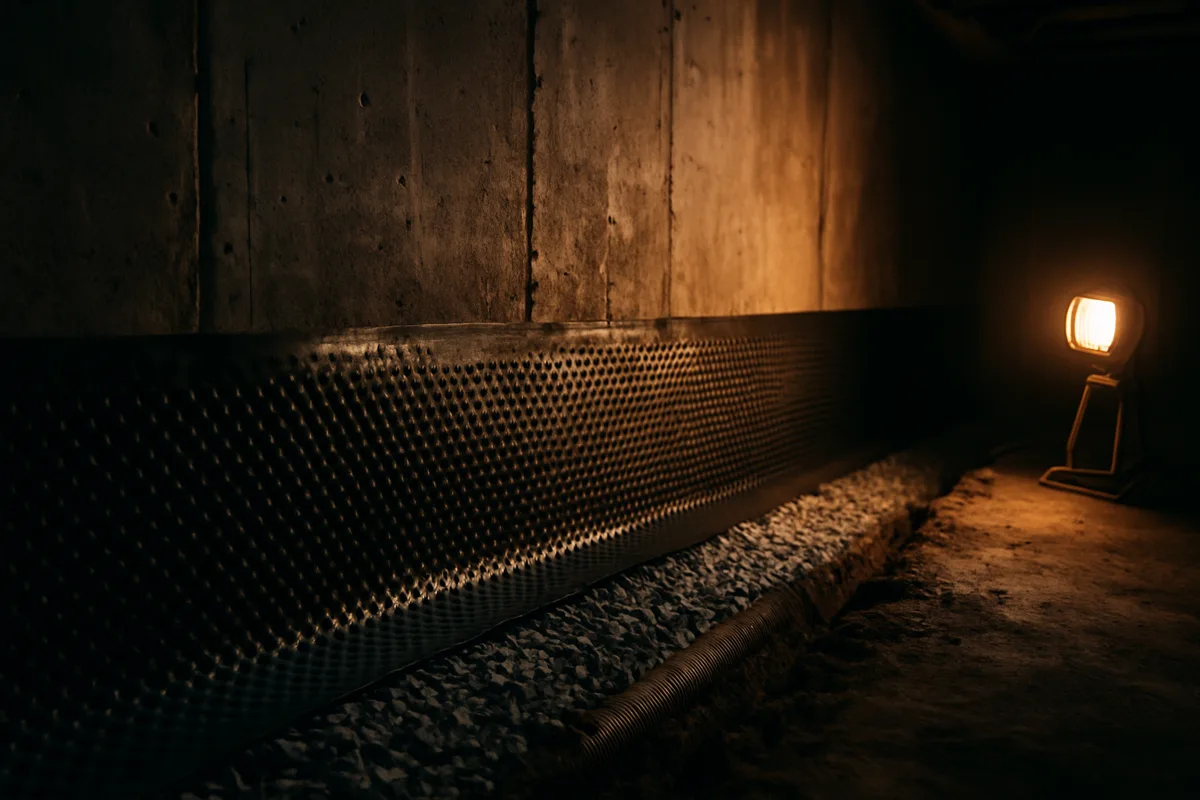
A basement in Niagara is not dry by default. It is dry because something is keeping the water out, and in this region there is a lot of water to keep out: clay that holds it against the wall, a water table that rises to meet the slab in the north end of St. Catharines and along the Lake Erie shore, a thaw every March that arrives before the ground has thawed, and an aging network of weeping tile under houses that were built before anyone thought a basement would become a family room.
Basement waterproofing is the work of making that dryness deliberate. On this site it means interior work: sealing the entry points in the wall, catching the water that gets past them, and moving it out of the house before it ever reaches your floor. No excavation, no torn-up yard, and a system that is designed for the specific way Niagara ground behaves.
Signs your basement needs more than a patch
Water at the wall-floor joint
Dampness or a puddle along the base of the wall, especially after a storm or in spring, means groundwater is above the slab and coming through the cove. Sealing the wall will not stop it. It needs drainage.
Efflorescence across a whole wall
The white mineral bloom on concrete is evaporated water leaving its salts behind. A line of it along one crack points to that crack. A haze across a whole block wall means the wall is absorbing water through its face and cores.
The same corner, every spring
A leak with a schedule is a leak with a cause. In Niagara that cause is usually frozen clay in March, and a basement that “only leaks in spring” is still getting its framing and insulation wet once a year.
A sump pump that never runs, or never stops
Never runs might mean the tile is not reaching the pit. Never stops might mean the water table is above the pit for weeks at a time. Both are information.
You are about to finish the basement
The single best time to waterproof is before the drywall goes up. Everything is accessible, the repair is cheap, and you get a spring season to confirm it worked.
Interior vs exterior: what each one actually does
Interior waterproofing works at the inside face of the wall and under the slab. It seals cracks and penetrations with injection, manages block walls with membranes, and collects groundwater in a drainage channel that feeds a sump. It is done from inside, in any season, and it does not disturb the yard. For most Niagara homes with poured walls and localized leaks, this is the complete answer. For high water table lots, it is the only answer that addresses water coming from below.
Exterior waterproofing excavates to the footing, cleans and coats the outside of the wall, replaces the weeping tile and backfills with drainage stone. It is the right repair when a wall is badly deteriorated, when the exterior tile has collapsed, or when the wall itself is failing. It is also several times the cost, it destroys landscaping and hardscape, and it cannot be done when the ground is frozen. We are honest about when it is needed and honest that it usually is not.
We do interior work. When a house genuinely needs exterior excavation, we say so.
Interior waterproofing methods we use
- Crack, tie rod and penetration injection with polyurethane or epoxy for every entry point in a poured wall. This is the foundation of most Niagara waterproofing jobs. Details on our crack injection page.
- Interior perimeter drainage for cove-joint and slab water. A section of slab along the wall is removed, a drainage channel is set on the footing, the wall is fitted with a drainage layer that directs any wall seepage into the channel, and the channel runs to a sump. Slab is re-poured over it.
- Sump pit and pump installation or upgrade to Ontario Building Code specification (a covered pit at least 750 mm deep and 0.25 square metres in area, with an automatic pump where gravity drainage is not practical), with a check valve, a discharge line that terminates well away from the foundation, and a battery backup where the homeowner wants one.
- Interior membrane systems on block walls, directing water that comes through the face or cores down into the drainage channel rather than onto the floor.
- Window well drainage tied into the perimeter system where wells are the source.
- Sealing the slab edge and penetrations where the floor drain or a service entry is the path.
How a waterproofing project runs
- Free assessment. We inspect every wall, the slab, the cove, the sump, the penetrations and the exterior grading and downspouts, then explain what is coming in and from where. Most jobs are diagnosed on this visit. See wet basement repair for how we trace a leak.
- A written scope and price. Every entry point listed, the method for each, the linear footage of any drainage, and a firm number. No allowances, no surprises.
- The work. Injections first, then any drainage and sump work. A single-wall drainage run is typically a one to two day job; a full perimeter is longer.
- Cleanup and documentation. Concrete dust is managed with containment and vacuums. You get photos of every stage and a written warranty.
- A spring check. We want you to call after the first thaw. A dry basement in April is the actual test.
Why waterproof from inside
- It works in Niagara’s soil. Clay holds water against a wall whether or not the outside is coated. Interior drainage takes the water the clay delivers and removes it.
- It works in winter. Most Niagara leaks show up in February and March. Interior work happens then; excavation waits for May.
- It is a fraction of the cost of digging. And it does not add a landscaping bill.
- It handles water from below. Exterior coatings do nothing about a water table that rises above the slab. A sub-slab drainage channel does.
- It is warrantied in writing. Every injected crack and every drainage system we install is covered against leaking.
Cost factors
- Number and type of entry points. Injections are priced per crack or hole. Drainage is priced per linear foot.
- Linear footage of drainage. One wall is a very different project from a full perimeter.
- Slab thickness and condition. Thick or heavily reinforced slabs take longer to open.
- Sump work. A new pit and pump, or an upgrade to an existing one, with or without battery backup.
- Finished basement. Removing and replacing finishes along the affected wall adds time.
- Block vs poured. Block walls generally need membrane plus drainage rather than injection alone.
- Municipal subsidies. Niagara Falls, Welland and other Niagara municipalities run programs that help pay for sump installation, weeping tile disconnection and backwater valves on eligible homes. We will tell you if your job qualifies and what the current terms are.
What a Niagara basement waterproofing has to account for
Clay soils that hold water against the house
South of the Escarpment, most of the region sits on the Haldimand Clay Plain, glacial lake clay and silt that drain slowly and stay wet into late spring. The backfill around a foundation is looser than the undisturbed clay around it, so it acts as a reservoir that fills every storm and drains slowly. This is the “clay bowl” that makes Niagara basements leak at the wall and seep at the cove. Any waterproofing plan here has to assume the wall will be wet on the outside and manage the water rather than pretend it can be kept away.
Freeze-thaw that runs all winter
Between the two lakes, Niagara’s winter temperatures cross zero repeatedly rather than staying down. That expands and contracts the saturated clay, opens cracks a little more each cycle, and delivers the year’s biggest water load in March when the ground is still frozen and cannot absorb it. Flexible polyurethane in the cracks and a drainage system that is already in place before the thaw are how you get ahead of it.
The water table near the lakes and the canal
The Lake Ontario shore and north-end neighbourhoods of St. Catharines, the Crystal Beach, Ridgeway and Bridgeburg areas of Fort Erie, Chippawa along the Welland River, Dain City and the canal-side streets of Welland, and the canal corridor through Thorold all have groundwater that can sit at or above slab level for stretches of the spring. In these zones, waterproofing means drainage and a reliable sump, full stop. Wall sealing alone will fail at the cove.
Poured concrete vs block, by era
Concrete block is common in the wartime and early postwar streets across the region, with stone and brick in the oldest cores. Poured concrete is the norm from about the 1960s. Block walls weep through their cores and are managed with membrane and drainage; poured walls leak at cracks and ties and are sealed by injection. Mixed foundations, where a later addition is poured against an original block wall, leak at the joint and need both approaches.
Weeping tile, sumps and the sewer
The Ontario Building Code requires foundation drainage around a basement and sets minimum sump pit dimensions where a sump is used. Older Niagara houses were built under earlier rules, and many still have weeping tile draining into the sanitary sewer, which is why a heavy storm can send sewage up through the floor drain. Disconnecting that tile, adding a proper sump, and installing a backwater valve is the single biggest flood-protection upgrade for those homes, and it is the one the municipal subsidy programs exist to encourage.
Permits
Interior injection and membrane work does not require a permit. A new sump connected to the storm sewer, or a weeping tile disconnection and backwater valve, may require a plumbing permit and inspection depending on your municipality, and the subsidy programs generally require it. We handle the paperwork when it applies and tell you up front.
Get a dry basement before the next thaw
If your basement has been wet more than once, or you are about to spend money finishing it, have it assessed first. The inspection is free, it covers every wall and the drainage, and you leave with a written plan that starts with the least invasive fix that will actually hold. Call (289) 271-5869 or book a free waterproofing assessment online. We work across St. Catharines, Niagara Falls, Welland, Fort Erie, Thorold and the rest of the Niagara Region, and we would rather see your basement in September than in March.
How It Works
Free Crack Inspection
We inspect the crack from inside the basement, check for signs of movement or structural concern, and confirm whether injection is the right repair before anything is booked.
Crack Preparation
The crack is cleaned along its full length, surface ports are set at regular intervals, and the face of the crack is sealed with epoxy paste so the injection material stays inside the wall.
Injection
Epoxy or polyurethane is injected port by port from the bottom up until the crack is filled through the full thickness of the wall, not just at the surface.
Verification & Warranty
We confirm the crack is filled end to end, remove the ports, and walk you through the finished repair. Your injection is backed by a written warranty against leaking.
Frequently Asked Questions
What is interior basement waterproofing?
Interior waterproofing manages water at the inside face of the foundation, using methods like crack injection, membrane systems and drainage to keep the finished space dry. It is done without excavating around the home.
Is interior or exterior waterproofing better?
They solve different problems. Interior repairs like injection are ideal for localized leaks in poured walls and cost far less. Exterior excavation is reserved for widespread wall deterioration or failed exterior drainage. We recommend the least invasive fix that actually solves the problem.
Will waterproofing stop mould in my basement?
Stopping the water entry removes the moisture source that mould needs, which is the essential first step. Existing mould on finishes should still be cleaned or remediated separately once the leak is fixed.
When should I waterproof my basement?
Any time you see recurring dampness, efflorescence, staining or active leaks, and especially before finishing a basement. Repairs done before framing and drywall go in are far cheaper than repairs after.
What is an interior drainage system?
A channel installed at the base of the wall, below the slab, that collects water entering at the cove joint or through the wall and carries it to a sump pit, where a pump discharges it away from the house. It is the standard fix for groundwater and high water table problems in Niagara.
Do I need a sump pump in Niagara?
If your home has weeping tile that drains to a sump, yes, and it should have a working pump with a check valve and ideally a battery backup, because spring storms and power outages arrive together. Homes with tile still tied to the sanitary sewer should look at disconnecting, which several Niagara municipalities help pay for.
How long does interior waterproofing take?
A single injected crack takes an hour or two. A full interior drainage system along one or more walls is usually one to three days depending on length, slab thickness and whether the basement is finished. We give a schedule with the written quote.
Can I finish my basement after waterproofing?
Yes, and that is the right order. Waterproof first, then let the walls dry and confirm through a spring before framing. Finishing a basement over an unresolved leak is the most expensive mistake we see.